
7 Creative Tufting Ideas: What You Can Make with a Tufting Gun
Looking for tufting ideas for your next project? Explore seven ways to use a tufting gun, from rugs and wall hangings to cushions, bags and textured home accessories. Discover examples from the tufting community, practical design tips and what to consider before choosing your project.
For your first project, start with a manageable size, a simple outline and a few large colour areas. Small details, lettering and complicated shapes usually take more control — and smaller projects are not always easier.
Which Tufting Project Should You Try?
Not sure where to start? Use this quick comparison to find a project that suits your experience. These are general guidelines rather than fixed difficulty levels.
| Project | Good starting point? | What adds difficulty? |
|---|---|---|
| Simple rug | Yes, with a straightforward design | Large size, lettering and detailed carving |
| Chair or stool cover | Better after some practice | Fitting, upholstery and securing the edges |
| Wall hanging | Yes, with large colour areas | Detailed portraits and complex shapes |
| Cushion | Suitable if you can also sew | Seams, shaping and assembling the cover |
| Bag or wearable accessory | Better after some practice | Small details, construction and durability |
| Pet portrait | Start with a simplified silhouette | Realistic shading and facial details |
| Mirror frame or small gift | Depends on the design | Narrow edges, tiny shapes and assembly |
1. The Classic: Tufted Rugs
A handmade tufted rug is a great way to explore colour, texture and design. From bold abstract shapes to playful illustrations, you can make something that fits your own style.
A simple rug can be a good first tufting project because it allows you to practise straight lines, curves and filling larger areas. You will also learn the different stages of rug making, from preparing your tufting frame to applying backing and finishing the edges.
Beginner tip: Choose a simple shape with two or three colours and generous spaces between details. A bold abstract rug gives you room to practise without having to reproduce a complicated image.
Plan the whole project: Tufting is only one stage. Allow additional time for applying adhesive, drying, backing and finishing the edges. Beginners can take very different amounts of time to complete the same design.
If you are working with cut pile, you can trim and shape the surface for a cleaner finish. With loop pile, preserve the loops rather than cutting them during finishing.

What you'll need: A tufting gun, frame, primary tufting cloth, yarn, rug adhesive and finishing materials.
Explore our tufting guns, tufting cloth and tufting yarn.
2. Upholstered Furniture: Tuft a Chair or Stool
Tufting doesn't have to stay on the floor. You can also use tufted fabric to give furniture a completely different look. Think of a colourful stool, a textured chair seat or a statement bench.
Furniture upholstery is a more advanced project because your tufted piece needs to fit the shape of the furniture and withstand regular use. The construction and finishing are just as important as the tufting itself.
Project tip: Make a small test piece before starting. Check how the tufted fabric bends around corners and how you will secure it to the furniture. Plan enough extra material for wrapping and attaching the edges.
What you'll need: Tufting supplies, suitable upholstery materials, foam if required, and tools for securely attaching the finished piece. Consider durability and how the furniture will be cleaned.


3. Tufted Wall Art: Soft, Textured Home Decor
Want to create something for your walls instead of your floor? Tufted wall hangings combine colour, shape and texture to create textile artwork.
Wall art can be a good beginner project when you choose a straightforward design with large colour areas. You can experiment with abstract shapes, colour blocking and different yarn textures without having to create a rug intended for regular foot traffic.
Beginner tip: Start with an abstract composition rather than a detailed portrait. Larger shapes are easier to tuft consistently, and you can still create a striking result with only a few colours.
Finishing tip: Think about how you will display your work before you begin. You may need a firm backing, hanging hardware or a wooden support to keep the finished piece stable. Make sure the hanging system can safely support its weight.


Need ideas for displaying your work? Watch different ways to hang tufted wall art, demonstrated by @studio.eisama.
4. Tufted Cushions and Pillows
Tufted cushions add colour and texture to sofas, beds and reading corners. You can create simple geometric designs, playful shapes or matching sets that complement your interior.
However, making a cushion involves more than tufting. You will also need to construct a cover, attach the tufted front to a backing fabric and insert a cushion filling.
Project tip: Plan the cushion dimensions and seam allowance before transferring your design. Keep important details away from the edges, where the fabric will be sewn together.
What you'll need: Tufting supplies, backing fabric, sewing tools, a cushion insert and suitable finishing materials. If you don't sew, you can have the cover assembled by someone with sewing experience.


For a closer look at the construction process, watch this tufted pillow tutorial by @bom_matta.
5. Wearable Tufted Accessories
Tufting can also be used to create bags, patches and other wearable accessories. These projects combine textile art with fashion and allow you to take your designs beyond traditional rugs.
Small accessories may look easier than large rugs, but tiny details and narrow shapes often require more precision. You'll also need to consider how the tufted piece will be attached and how it will hold up during everyday use.
Project tip: Start with a bold design and avoid very thin lines or tiny lettering. If you're making a bag, plan the structure, lining, handles and seams before tufting the decorative panel.
What you'll need: Tufting materials, a suitable backing, fabric for construction and sewing supplies. For wearable items, consider weight, flexibility and durability.


6. Pet Rugs and Custom Pet Portraits
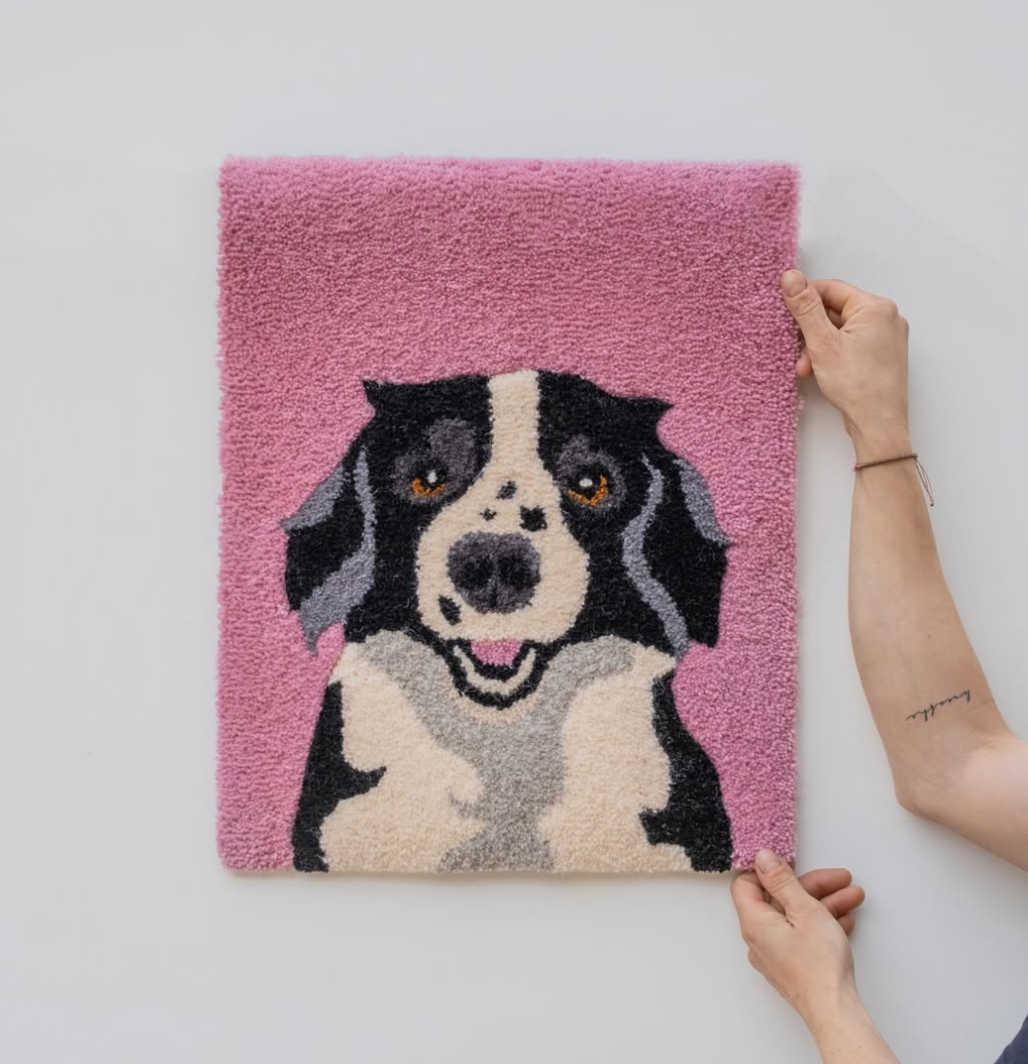
Want to turn your favourite animal into a tufted design? Pet portraits and personalised pet rugs are a creative way to capture a familiar face in yarn.
You can make anything from a simple animal silhouette to a detailed portrait with multiple colours and shading. The level of detail makes a big difference to the difficulty of the project.
Beginner tip: Start with a recognisable silhouette and a few contrasting colours. Choose a reference photo with clear outlines and good contrast. Simplify complicated fur patterns before transferring the design onto your cloth.
Advanced technique: Realistic portraits require careful colour selection, smaller tufted sections and controlled trimming. Plan the details of the eyes, nose and facial features before you begin.


7. Tufted Home Decor and Small Gifts
Looking for a handmade gift or a smaller decorative project? Tufting can be used for mirror frames, ornaments, coasters and other home accessories.
Keep in mind that small doesn't always mean simple. Tiny shapes, narrow edges and detailed designs can be challenging with a tufting gun. The final assembly also requires planning.
Tufted Mirror Frames
A tufted mirror frame adds texture and colour to a practical object. Rounded shapes and bold colour blocks are usually easier to work with than narrow, intricate patterns.
Design tip: Measure the mirror and plan the opening carefully. Make sure the finished tufted piece doesn't cover the reflective surface or interfere with securely mounting the mirror.

Tufted Ornaments
Small tufted ornaments can make playful seasonal decorations. Think of simple flowers, candy shapes or abstract decorations.
Design tip: Choose shapes with enough space for the tufting gun to move comfortably. Plan how the ornament will be backed, trimmed and hung. Avoid tiny details that may disappear into the yarn.

Tufted Coasters
Tufted coasters are a fun way to experiment with small colour combinations and simple shapes. They also make personal handmade gifts.
Design tip: Use a straightforward outline and keep the surface relatively even. Choose a stable backing and remember that tufted coasters are decorative textile items rather than heat-resistant surfaces. Avoid using them beneath very hot objects.

Ready to Start Your Next Tufting Project?
Whether you're making your first rug or experimenting with a more advanced textile project, the best place to start is with a design that matches your experience, available tools and time.
If you're new to tufting, begin with a simple rug or wall hanging. Focus on learning how to control your tufting gun, maintain consistent lines and finish your work properly before moving on to more complicated constructions.
You'll need the right materials for your project. Explore our tufting guns, tufting yarn and tufting cloth to get started.
And when your project is finished, we'd love to see it! Share your work on Instagram, tag @tuftingshop and use #tuftingshopcommunity.